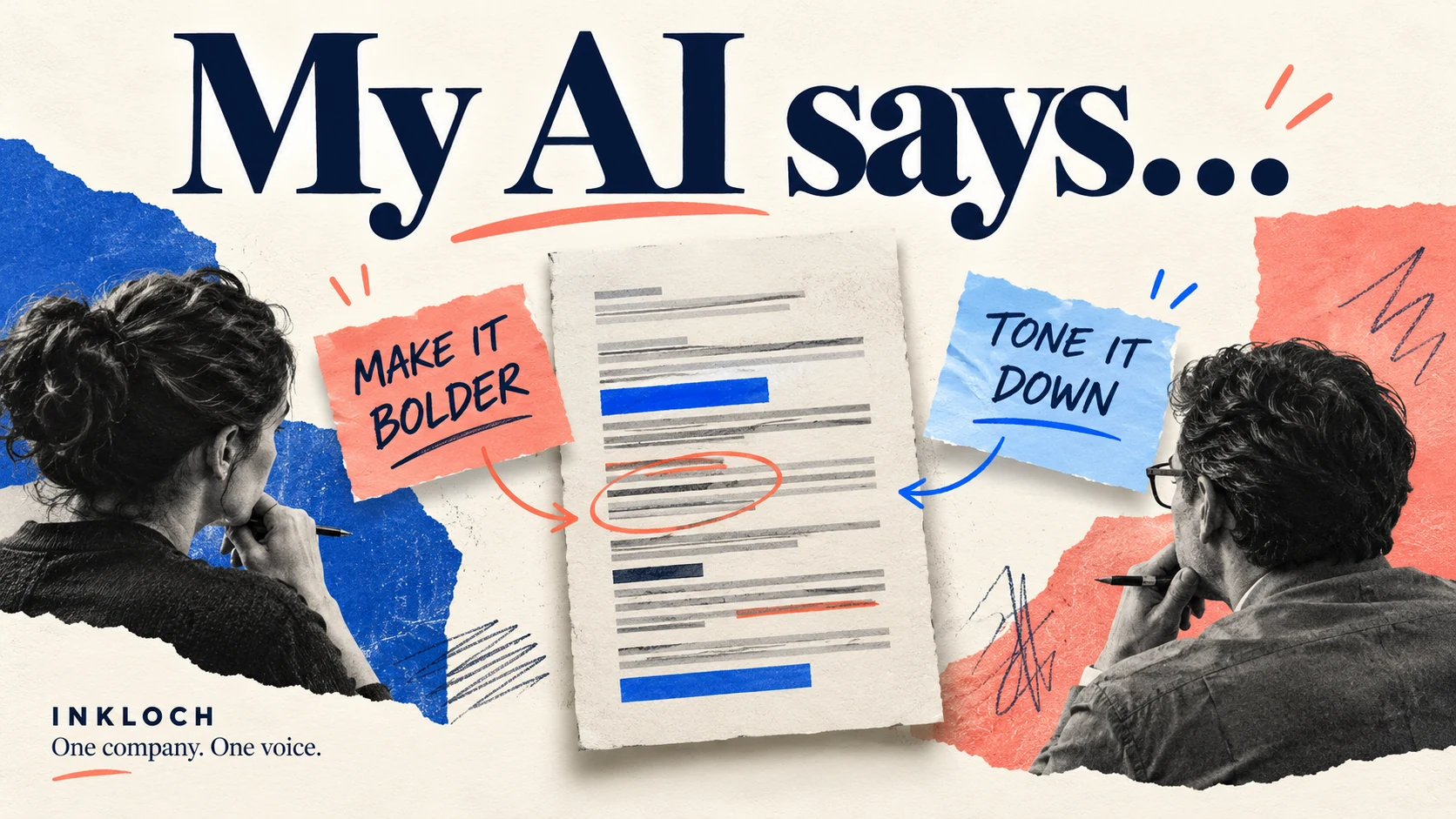
“My AI says this doesn’t work.”
Picture a communications team preparing an announcement. The writer has worked through the brief, checked the facts and shaped the message for its audience. A colleague pastes the draft into an AI tool and asks for a review.
The response recommends a stronger opening, shorter sentences and a more confident tone.
Another colleague runs the revised version through their own tool. The advice comes back differently: soften the language, add context and make it sound less promotional.
The team now has more feedback to reconcile. It still needs to decide which version serves the announcement.
This is where AI can complicate an already difficult part of corporate communications: agreeing when a piece of writing is ready.
A critique presented in neat categories can sound authoritative. “Weak opening.” “Generic language.” “Lacks impact.” Each observation might deserve attention. Its value depends on the reasoning behind it and the task the writer was trying to fulfil.
What did the tool receive? The draft alone? A request to find weaknesses? The approved brief and supporting facts? Did anyone explain why the opening was restrained or why a particular qualification had to stay?
Those questions matter because “better” needs a definition.
A statement about a service disruption has different obligations from a recruitment campaign. A chief executive’s message to employees needs to reflect the relationship with those employees. A social post may have to make its point before the reader scrolls past.
The same stylistic instruction can help one piece and undermine another.
Consider a fictional announcement containing this sentence:
“We expect the new service to reduce response times once the rollout is complete.”
A proposed rewrite reads:
“Our new service delivers faster support.”
It is shorter and more direct. It also changes the claim. An expected future benefit has become an assertion about what the service delivers today. The condition attached to the rollout has disappeared.
Someone reviewing only for confidence and brevity might welcome that edit. Someone responsible for the accuracy of the announcement would need to question it.
Other disagreements involve legitimate editorial choices. An opening can lead with a customer benefit, a strategic decision or an explanation of what happens next. Choosing between them requires a view of the reader’s needs and the purpose of the communication.
Calling one version “more engaging” leaves that choice unresolved.
There is also a risk in how feedback is presented. “I would prefer a punchier opening” makes the preference visible. “AI has identified that the opening is weak” can make the same preference sound like an independent finding.
The person sharing that feedback still needs to explain it. Which part is weak? For which audience? What would the suggested change improve?
Writers should face the same questions. Having written the first draft does not make their choices beyond challenge. A useful review should expose unclear thinking, unsupported claims and language that makes the reader work too hard.
The practical answer is to give everyone a common basis for that review.
Agree the audience, the purpose and the main message. Make the supporting facts available. Identify any commitments or qualifications that must survive an edit. Include examples of the company’s voice that are relevant to the format.
Then ask for feedback against those criteria. A review instruction could read:
“Assess this draft against the attached brief and approved facts. Explain what already works. Identify any factual problems, unclear passages or gaps in the message. Separate essential corrections from optional stylistic suggestions, and explain the reason for each change. Flag any edit that changes a commitment, qualification or degree of certainty.”
That gives the team specific judgements to examine. An alternative opening can be assessed on whether it helps the intended reader. A proposed deletion can be checked for what it removes.
Someone must still own the final decision. A shared brief provides a basis for resolving disagreement; it cannot remove the need for editorial judgement.
This is the principle behind Inkloch: a shared company narrative, approved facts and a clear voice give people a common starting point for creating and reviewing communications.
When the next comment arrives saying, “My AI says this doesn’t work,” the useful response is straightforward:
“Show me what it identified, and let’s check it against the brief.”